Grow
Starting a vegetable garden
Where to put it, how to prepare the ground, and what to plant first — for a climate most gardening advice was not written for.
The short answer
Starting a vegetable garden is a trainable skill, not a personality trait — begin small, get the soil and water right, and build from there. Sort water and sunlight before you buy a single seed; in load-shedding South Africa, a JoJo tank and a sunny bed beat any gadget. Grow what your family actually eats, start with forgiving crops, and expand as your confidence and compost grow.
What’s in this guide
- Why start a vegetable garden now?
- Where should you put your vegetable garden?
- How do you prepare the soil?
- What should a beginner grow first?
- Watering, mulch and load-shedding realities
- Common beginner mistakes to avoid
- Key takeaways
- Frequently asked questions
Starting a vegetable garden is far simpler than the internet makes it sound, and most of what you have read about it is wrong. You do not need raised beds, imported seeds, or a shed full of tools. You need sunlight, decent soil, a reliable way to water, and a willingness to pay attention.
I have grown food on a Karoo smallholding for over a decade, through drought, load-shedding and the occasional locust. The plants that fed us were rarely the fussy ones. They were the forgiving crops planted in the right spot, watered consistently, and left mostly alone.
This is a calm, evidence-led guide. Less fear, more competence. Let us get your first beds producing food this season.
Why start a vegetable garden now?
Starting a vegetable garden gives you fresh food at a fraction of retail cost and a buffer against price shocks and supply gaps. It is one of the highest-return self-reliance skills you can learn, and it pays you back every single season.
South African food prices have climbed steadily. According to Statistics South Africa, food and non-alcoholic beverage inflation has repeatedly outpaced general inflation in recent years. A few well-tended beds of spinach, tomatoes and herbs quietly trim your grocery bill week after week.
There is a second, quieter benefit. Growing your own food reconnects you to seasons, weather and soil. It is grounding work that rewards attention over money. You will eat better, waste less, and understand your own patch of ground in a way no delivery app can offer.
Where should you put your vegetable garden?
Put your garden where it gets at least six hours of direct sun and where you can water it easily. Sunlight and water access decide your success before you plant anything — everything else is detail.
Walk your property at different times of day and note where the sun actually falls. North-facing spots get the most light in the Southern Hemisphere. Avoid deep shade from walls and trees, and keep the beds close to your kitchen door so you actually tend them.
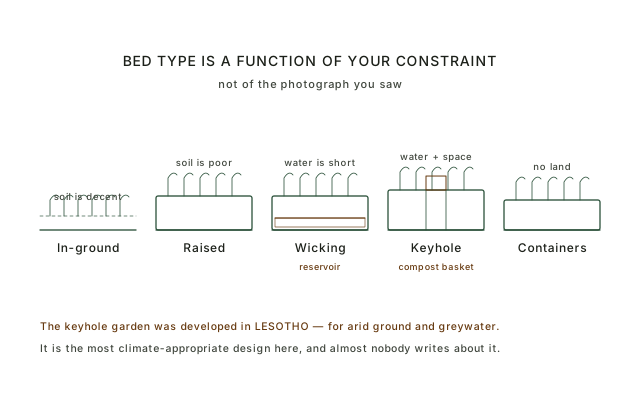
Beds, containers or ground?
You do not need to choose the fanciest option. Choose the one that suits your space and budget.
- In-ground beds: Cheapest and best for larger yards. Good if your soil is workable.
- Raised beds: Better drainage and less back strain. Ideal where soil is poor or compacted.
- Containers: Perfect for townhouses, patios and renters. Herbs, salad greens and tomatoes thrive in pots.
If you are on a smallholding after semigration, start with one or two beds near the house rather than tilling a whole field. Ambition is cheap; watering a large garden through summer is not.
How do you prepare the soil?
Good soil is loose, dark and full of organic matter — get this right and your plants half-raise themselves. Spend your first effort feeding the soil, not buying fertiliser.
Dig over your chosen bed and remove weeds and stones. Then work in generous compost: at least a 5cm layer forked into the top 20cm. Compost improves both sandy soils that drain too fast and clay soils that hold too much water. It is the single best investment you can make.
If you are unsure about your soil, a simple test helps. Squeeze a handful of moist soil: if it forms a sticky ball, it is clay-heavy; if it falls apart instantly, it is sandy. Both are fixed the same way — more organic matter, added every season. Mulching organics research from the Royal Horticultural Society backs this up: consistent organic inputs steadily improve structure and moisture retention.
Start a compost heap on day one. Kitchen scraps, grass clippings and dry leaves become free soil food within a few months. Homemade compost is the backbone of every productive garden I have run.
What should a beginner grow first?
Grow forgiving, fast-rewarding crops that your family actually eats — leafy greens, herbs, beans and tomatoes. Success early on keeps you motivated; failure with fussy plants makes people quit.
Match your planting to the season. In most of South Africa, cool-season crops go in around March–April, and warm-season crops from September once frost risk passes. Check your regional frost dates before sowing.
| Crop | Difficulty | Season | Weeks to harvest |
|---|---|---|---|
| Swiss chard (spinach) | Very easy | Year-round | 6–8 |
| Lettuce & salad greens | Easy | Cool season | 4–6 |
| Green beans | Easy | Warm season | 8–10 |
| Tomatoes | Moderate | Warm season | 10–14 |
| Herbs (parsley, basil) | Easy | Warm season | 6–8 |
| Radishes | Very easy | Cool season | 3–4 |
Buy seedlings for your first tomatoes and peppers to skip the trickiest stage, and sow beans, radishes and greens directly from seed. Once you have a few wins behind you, saving your own seed becomes a natural next step. Our seed-saving guide covers that when you are ready.
Watering, mulch and load-shedding realities
Consistent watering matters more than frequent watering — deep, less-often soakings build strong roots. In a country of erratic supply and load-shedding, store water and mulch heavily to protect what you have.
Most vegetables want roughly 25mm of water a week, more in peak summer heat. Water early in the morning to reduce evaporation and disease. Push a finger into the soil: if it is dry a knuckle deep, water; if it is moist, wait.
Working around load-shedding
Municipal pumps and borehole pumps fail during power cuts, so do not depend on mains pressure at watering time. A JoJo tank fed by gravity or a small solar pump keeps your garden alive when the grid is down. Even a few 25-litre containers filled during power-on hours can bridge a rough patch.
Rainwater harvesting is worth the effort. A single downpour off your roof can fill hundreds of litres of storage. If you are building out your supply, our rainwater harvesting guide walks through tanks, gutters and first-flush filters.
Then mulch. A thick layer of straw, dry leaves or wood chips over the soil surface cuts evaporation dramatically. Research summarised by Gardening Know How and countless field studies shows mulch can reduce soil water loss substantially while suppressing weeds. Mulch is water security you can rake into place.
Common beginner mistakes to avoid
Most first-year gardens fail from over-ambition, not lack of talent. Start small, stay consistent, and let the garden teach you at its own pace.
- Planting too much too soon: A weeded, watered 4m² bed beats a neglected 40m² one.
- Ignoring the soil: No amount of watering fixes dead, compacted ground. Feed it first.
- Wrong-season planting: Sowing warm crops before your last frost wastes seed and hope.
- Overwatering seedlings: Soggy soil rots roots faster than dry soil kills them.
- Skipping mulch: Bare soil bakes, cracks and grows weeds. Cover it.
- Chasing gadgets: You need a fork, a watering can and attention — not a shed of kit.
Every experienced gardener has killed plenty of plants. Growing food is a trainable skill, built one season at a time. Keep a simple notebook of what you planted, when, and how it did. That record is worth more than any app.
Key takeaways
- Sort sunlight and water access before buying seeds — six hours of sun and an easy watering route decide everything.
- Feed the soil with compost first; it is the highest-return effort in the whole garden.
- Grow forgiving crops your family eats — chard, greens, beans and tomatoes — and match them to the season.
- Store water in a JoJo tank and mulch heavily so load-shedding and drought cannot wipe out your progress.
- Start small, keep records, and expand as your confidence and compost grow.
Frequently asked questions
How do I go about starting a vegetable garden with no experience?
Begin by choosing a small, sunny spot near your kitchen with at least six hours of daily sun. Improve the soil with a thick layer of compost, then plant a few forgiving crops like Swiss chard, lettuce and green beans. Water deeply and consistently, mulch the surface, and expand only once your first bed is thriving.
What is the easiest vegetable to grow first?
Swiss chard, often sold as spinach in South Africa, is the most forgiving. It tolerates heat and cool weather, grows year-round in most regions, and you harvest outer leaves for months from a single plant. Radishes are the fastest, ready in three to four weeks, making them excellent for building early confidence.
How much space do I need to start?
Very little. A single 2m x 1m bed or a few large containers on a sunny patio can produce meaningful quantities of greens and herbs. Renters and townhouse dwellers do well with pots. It is far better to tend a small space perfectly than to struggle with a large, neglected plot.
How do I keep my garden alive during load-shedding?
Store water so you are never dependent on grid-powered pumps at watering time. A gravity-fed JoJo tank, a small solar pump, or even filled containers bridge the gaps. Mulch heavily to slow evaporation, and water early in the morning. With stored water and mulch, a few days without power will not harm your garden.
When is the best time to plant in South Africa?
It depends on the crop and your frost dates. Cool-season crops like lettuce and spinach go in around March to April, while warm-season crops such as tomatoes and beans are planted from September once frost risk passes. Check your local last-frost date, as it varies widely between the coast, the Highveld and the Karoo.
Ready to build a garden that feeds you through good seasons and hard ones? Start with one bed this week, then explore our food security guides for storing and preserving your harvest with the same calm, practical approach. Less fear, more competence — one row at a time.
{"@context": "https://schema.org", "@type": "FAQPage", "mainEntity": [{"@type": "Question", "name": "How do I go about starting a vegetable garden with no experience?", "acceptedAnswer": {"@type": "Answer", "text": "Begin by choosing a small, sunny spot near your kitchen with at least six hours of daily sun. Improve the soil with a thick layer of compost, then plant a few forgiving crops like Swiss chard, lettuce and green beans. Water deeply and consistently, mulch the surface, and expand only once your first bed is thriving."}}, {"@type": "Question", "name": "What is the easiest vegetable to grow first?", "acceptedAnswer": {"@type": "Answer", "text": "Swiss chard, often sold as spinach in South Africa, is the most forgiving. It tolerates heat and cool weather, grows year-round in most regions, and you harvest outer leaves for months from a single plant. Radishes are the fastest, ready in three to four weeks, making them excellent for building early confidence."}}, {"@type": "Question", "name": "How much space do I need to start?", "acceptedAnswer": {"@type": "Answer", "text": "Very little. A single 2m x 1m bed or a few large containers on a sunny patio can produce meaningful quantities of greens and herbs. Renters and townhouse dwellers do well with pots. It is far better to tend a small space perfectly than to struggle with a large, neglected plot."}}, {"@type": "Question", "name": "How do I keep my garden alive during load-shedding?", "acceptedAnswer": {"@type": "Answer", "text": "Store water so you are never dependent on grid-powered pumps at watering time. A gravity-fed JoJo tank, a small solar pump, or even filled containers bridge the gaps. Mulch heavily to slow evaporation, and water early in the morning. With stored water and mulch, a few days without power will not harm your garden."}}, {"@type": "Question", "name": "When is the best time to plant in South Africa?", "acceptedAnswer": {"@type": "Answer", "text": "It depends on the crop and your frost dates. Cool-season crops like lettuce and spinach go in around March to April, while warm-season crops such as tomatoes and beans are planted from September once frost risk passes. Check your local last-frost date, as it varies widely between the coast, the Highveld and the Karoo. Ready to build a garden that feeds you through good seasons and hard ones? Start with one bed this week, then explore our food security guides for storing and preserving your harvest with the same calm, practical approach. Less fear, more competence — one row at a time."}}]}