Water
What a borehole really costs in inland South Africa
A drilling quote is a rate, not a total. Here is what sits between the two, why the depth is the variable that decides everything, and the sequence that stops you buying the wrong pump.
The short answer
A borehole quote prices metres, not a finished water supply. Budget past your quoted depth rather than to it, because you are buying however many metres the ground turns out to require. The costs that do not appear on a drilling quote are siting, casing, the pump, the rising main, electrical compliance and a SANS 241 water analysis. Never buy the pump before the yield has been tested over a full working day.
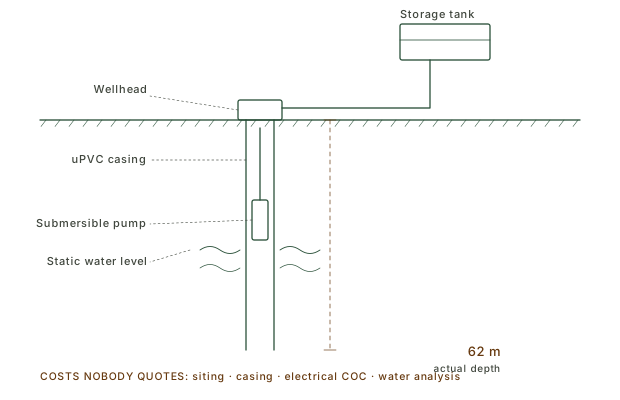
Every borehole article we could find before drilling ours quoted a price per metre and stopped there. That number is real. It is also about a third of what you will actually pay.
The rest is siting, casing, a pump you will size wrong the first time, an electrical compliance certificate nobody mentions, and a water analysis that arrives after the driller has packed up and gone. None of it appears on the quote.
What follows is the full invoice, in the order the money left the account.
How long does it take?
Eleven weeks from the first phone call to the first glass of water. The drilling itself took a day and a half.
Why inland South Africa is different
The international guides describe a stable aquifer that you test once. dolomitic ground does not behave like that.
Yields swing hard between wet and dry season. A hole tested in February — the back end of our summer rain — can disappoint badly by September. If you can, have the yield tested at the end of winter. If you cannot, accept that you are buying a number which flatters itself, and size the pump for the lower figure.
There is a regulatory dimension too. Under the National Water Act 36 of 1998 water use is subject to general authorisation thresholds, and use above them requires registration with the Department of Water and Sanitation. Reasonable domestic use on a smallholding usually sits beneath the threshold — but usually is doing real work in that sentence, and it is a cheap phone call to be certain before you drill rather than after.
What went wrong
The sequence is not negotiable: drill, develop, test the yield over a full working day, and only then buy a pump matched to the number the test gives you. Every driller will tell you this. We were simply too keen to see water come out of the ground.
What we would do differently
- Budget to 70 metres, not to the quoted depth. Treat the quote as a rate, never as a total.
- Get the electrical compliance quoted at the same time as the drilling, so it is not an eleven-week surprise at the end.
- Sequence the pump purchase behind the yield test, however keen you are.
- Ask for the SANS 241 analysis up front. Ours came back clean, but the borehole two properties over did not, and they found out after plumbing it into the house.
Is it worth it?
On a working smallholding, yes — though the payback is slower than the enthusiasm suggests. Against municipal tariffs at current rates the hole pays for itself in roughly seven years.