The Still Room
How to make kombucha, and keep it alive through an inland South African summer
The ratio is simple and the method is forgiving. What is not forgiving is our summer — an inland South African January ferments a batch in half the time every recipe on the internet tells you.
The short answer
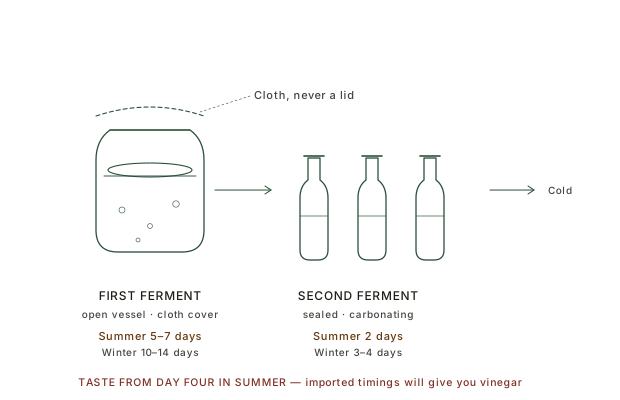
Kombucha is made by fermenting sweetened tea with a SCOBY. The standard ratio is 1 litre water, 5 g tea, 70 g sugar, plus 100–200 ml mature starter liquid. In an inland South African summer at 26–30 °C the first ferment completes in 5–7 days rather than the 10–14 days most recipes assume — taste from day four, not day ten.
Kombucha is one of the few things in the still room that needs no equipment, no licence and almost no space. A jar, a cloth and a bit of patience.
It is also the fermentation that most South Africans get wrong first, and for a reason that has nothing to do with technique. Every recipe you will read was written for a temperate kitchen.
The ratio
Per litre of water: 5 g of tea, 70 g of white sugar, and 100 to 200 ml of mature kombucha as starter.
Brew the tea, dissolve the sugar while it is hot, cool it to blood temperature or below, then add the starter and the SCOBY. Cover with a tight-woven cloth — not a lid — and secure it. It needs air and it must not get fruit flies.
- Use plain black or green tea. Nothing with added oils — Earl Grey will eventually kill a SCOBY.
- White sugar. The culture consumes it. Honey is unreliable and raw sugars ferment unevenly.
- Glass or food-grade plastic. Never metal for the vessel, and never reactive metal for stirring.
- The starter liquid matters more than the SCOBY disc. It is what acidifies the batch fast enough to keep mould out.
How long does it actually take here?
This is the part that is wrong in every imported recipe.
Fermentation rate roughly doubles for every 10 °C. A British kitchen at 18 °C gives the ten to fourteen days that recipes quote. A inland South African kitchen in January sits at 26 to 30 °C, and the same batch is done in five to seven.
| Ambient | Season here | Time to taste-test | Typical completion |
|---|---|---|---|
| 18 – 20 °C | inland winter, indoors | Day 8 | 10 – 14 days |
| 22 – 25 °C | Spring and autumn | Day 6 | 7 – 10 days |
| 26 – 30 °C | Midsummer | Day 4 | 5 – 7 days |
| Above 30 °C | Midsummer, unshaded room | Day 3 | Move it — quality drops |
| Rule | Taste from day four in summer |
Leave a summer batch for the fourteen days a recipe suggests and you will get vinegar. Perfectly good vinegar, and not at all what you were making.
The second ferment
Decant the finished kombucha into sealable bottles, leaving the SCOBY and enough liquid behind to start the next batch. Add fruit, ginger, or nothing at all. Seal and leave at room temperature for two to four days.
This is where carbonation happens, and it is where the only genuine hazard in the process lives. Sealed bottles under active fermentation build real pressure. Use proper swing-top bottles rated for it, never repurposed screw-top glass, and burp one bottle daily to check. In summer, second ferment for two days, not four.
A note on health claims
We are not going to tell you what kombucha does for you, and you should be wary of anyone who does.
Under the Medicines and Related Substances Act 101 of 1965 the regulatory trigger is the claim, not the product. Making a drink is one thing. Attaching a therapeutic claim to it — particularly if you intend to sell it — moves it into a regulated category, and the obligation sits with whoever makes the claim.
So: it is a pleasant, cheap, live-cultured drink that you can make from things you already have. That is the whole pitch, and it is enough.