Grow
Raised beds that work in a dry climate
Raised beds are sold as the universal upgrade to any garden. In a dry climate with sandy soils and strong UV, the case is more complicated — and the irrigation bill is the first thing that catches people out.
The short answer
Raised beds work well in South Africa when your native soil is compacted clay, poorly drained, or contaminated. When your soil is already sandy or the site is exposed and dry, a raised bed can make moisture management harder, not easier. The right answer depends on your soil, your water source, and your budget for drip irrigation — not on what works in a northern-hemisphere YouTube tutorial.
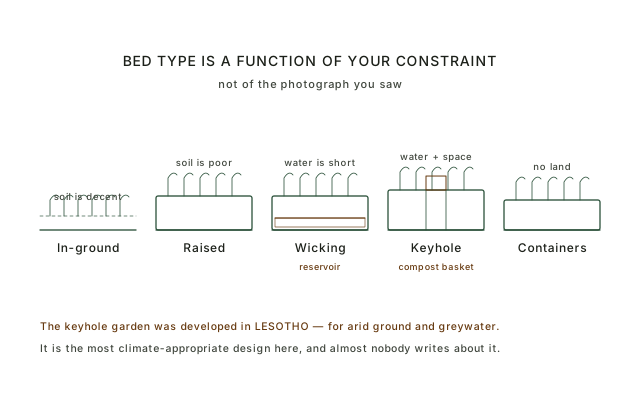
When a raised bed is the wrong answer here
The international case for raised beds rests on two conditions: soil too heavy and compacted to drain well, and a climate where waterlogging is a real risk. Much of the United Kingdom, the Pacific Northwest, and northern Europe qualifies. Much of the South African highveld, Karoo, and coastal hinterland does not.
If your native soil is already sandy or loamy and drains freely, a raised bed does not improve drainage — it accelerates it. A 300 mm column of imported growing medium sitting above grade dries from the sides and the surface simultaneously. In a Gauteng or Limpopo summer, an unirrigated bed can go from saturated to dangerously dry within 48 hours of rain stopping. In winter, the same bed loses moisture to wind and low humidity with nothing to replace it.
There are conditions where a raised bed is clearly the right choice in a South African garden:
- Compacted, poorly draining clay soils — common on older residential plots where topsoil was stripped during construction.
- Contaminated or chemically compromised ground — former orchard land dosed heavily with organo-phosphates, or any site with a history of industrial use.
- Shallow bedrock — rocky Highveld ridges where digging 200 mm down hits stone.
- Mobility or access requirements — raised growing surfaces that do not demand kneeling.
- Controlled growing medium from the start — when you want a specific compost-and-soil mix and the surrounding ground is not worth improving.
If none of those apply, a raised bed is an aesthetic choice, not an agronomic one. That is not a reason to avoid it, but it is a reason to understand the irrigation consequence before you build.
Materials under our UV and heat
The choice of material is where South African conditions diverge most sharply from northern-hemisphere advice. Timber that lasts fifteen years in England can fail in five here.
Timber
Untreated pine is not suitable. It deteriorates quickly in contact with moist soil and splits badly under UV. Treated pine — specifically SABS-graded CCA-treated timber rated for ground contact (Hazard Class H4 or H5 under SANS 10005) — is the accessible standard. The concern sometimes raised about copper-chrome-arsenate leaching into food soil is noted in older literature; current South African treated timber uses formulations at levels that regulatory bodies consider acceptable for vegetable beds, but growers who prefer to avoid treated timber entirely have two practical alternatives.
Railway sleepers — genuine Class 1 Eucalyptus sleepers treated with creosote — are extremely durable but carry a stronger case against use in food gardens given creosote's classification. Reclaimed sleepers sold at salvage yards vary widely in age, treatment, and condition.
Untreated Eucalyptus (bluegum) poles or hardwood offcuts are rot-resistant enough in dry inland conditions to last eight to twelve years in a bed that dries between waterings. They are harder to source in standard plank form but common as poles.
Concrete block and brick
The most durable option and, over a ten-year horizon, often the most economical. Standard 140 mm or 190 mm hollow concrete blocks laid dry or with mortar hold their shape indefinitely, do not rot, and do not move under thermal expansion the way steel does. The mass also moderates soil temperature — a meaningful advantage in climates where black steel beds can push root-zone temperatures above 38 °C in midsummer.
Galvanised or Zincalume steel
Corrugated steel beds have become the fashionable option and they perform reasonably well in moderate climates. In South Africa's interior, thermal cycling is the main concern: a dark-painted or unshaded steel bed on a north-facing slope can reach surface temperatures that damage shallow roots and accelerate drying at the bed margins. Zincalume (the aluminium-zinc alloy coating) outperforms straight galvanising under UV. Avoid powder-coated steel as the primary surface in full sun — the coating delaminates within three to four years in high-UV conditions, after which the underlying metal is unprotected.
If steel is the preferred aesthetic, orient beds east–west rather than north–south where possible, and fit a shade barrier on the western face during summer afternoons.
| Material | Realistic lifespan | UV risk | Thermal mass | Notes |
|---|---|---|---|---|
| CCA-treated pine (H4/H5) | 10–15 years | Low | Low | Acceptable for food beds under current SANS standards; specify ground-contact grade |
| Untreated hardwood / Eucalyptus | 8–12 years (dry sites) | Medium | Low | Suitable in drier inland areas; less predictable in humid coastal conditions |
| Concrete block or brick | 30+ years | None | High | Highest upfront labour; best long-term value; moderates soil temperature |
| Galvanised / Zincalume steel | 15–20 years | Low–medium | Very low | Thermal mass near zero; watch root-zone heat in full sun on highveld |
| Untreated pine | 2–4 years | High | Low | Not suitable; splits under UV and rots in contact with moist soil |
| Railway sleepers (creosote) | 20+ years | None | High | Not recommended for food gardens; high creosote content |
Depth, width, and reach
Two dimensions determine whether a raised bed functions well in practice: depth and width. Both are under-specified in most plans circulating online.
Depth
A 150 mm bed is sufficient for lettuce and radishes. It is not sufficient for tomatoes, peppers, pumpkins, or anything with a tap root. The functional minimum for productive vegetable growing is 300 mm of growing medium, with a further 100–150 mm of coarse drainage material below it if the bed sits on compacted or contaminated ground. This means a finished bed height of 400–450 mm for most situations — not the 200–250 mm beds commonly photographed in lifestyle content.
In a dry climate, greater depth is generally beneficial: deeper growing medium holds more moisture, takes longer to dry out, and maintains a more stable root-zone temperature. A 450–500 mm finished depth is not excessive for perennial herbs, brassicas, or long-season crops.
Width
The single-access-side maximum is 600 mm. The double-access-side maximum is 1,200 mm. Beyond these widths you will compact the growing medium stepping into the bed to reach the centre, which defeats the purpose. These figures are not cultural conventions — they are based on average adult arm reach without bending at the waist.
Length is constrained only by your irrigation layout, not by ergonomics. Beds longer than 4–5 metres become inconvenient to walk around and should have a crossing point planned from the start.
Why raised beds are different in South Africa
The irrigation consequence
This is the thing people discover too late: a raised bed in a dry climate is not a low-water option. It is a higher-water option with better control. The distinction matters.
Because the growing medium is above grade and exposed on four sides, it loses moisture faster than equivalent in-ground planting. Overhead watering — sprinklers, a hosepipe, a watering can — is inefficient at keeping a raised bed adequately moist in summer. Water applied to the surface evaporates before it reaches root depth, and the cycle needs to repeat more frequently than most people plan for.
The practical solution is subsurface or near-surface drip irrigation, with the emitter line buried 50–80 mm below the soil surface. This delivers water directly to the root zone, reduces surface evaporation, and allows meaningful water-use reduction compared with overhead irrigation. Without it, a raised bed in Gauteng or the Western Cape interior is an expensive way to grow something you will need to water twice a day in January.
Mulching — a 75–100 mm layer of dry grass, straw, or wood chip on the surface — reduces evaporation dramatically and should be treated as non-optional in a dry climate, not as an optional improvement. It also moderates surface soil temperature.
If you do not have a drip irrigation system in place before the bed is built, build it before you plant anything. The irrigation consequence is not something to solve after the fact.
| Method | Approximate daily loss (mm) | Notes | |||||||||||||||||||||||||||||||||||||||||||||||||||||||||||||||||||||||||||||||||||||||||||||||||||||||||||||||||||||||||||||||||||||||||||||||||||||||||||||||||||||||||||||||||||||||||||||||||||
|---|---|---|---|---|---|---|---|---|---|---|---|---|---|---|---|---|---|---|---|---|---|---|---|---|---|---|---|---|---|---|---|---|---|---|---|---|---|---|---|---|---|---|---|---|---|---|---|---|---|---|---|---|---|---|---|---|---|---|---|---|---|---|---|---|---|---|---|---|---|---|---|---|---|---|---|---|---|---|---|---|---|---|---|---|---|---|---|---|---|---|---|---|---|---|---|---|---|---|---|---|---|---|---|---|---|---|---|---|---|---|---|---|---|---|---|---|---|---|---|---|---|---|---|---|---|---|---|---|---|---|---|---|---|---|---|---|---|---|---|---|---|---|---|---|---|---|---|---|---|---|---|---|---|---|---|---|---|---|---|---|---|---|---|---|---|---|---|---|---|---|---|---|---|---|---|---|---|---|---|---|---|---|---|---|---|---|---|---|---|---|---|---|---|---|---|---|---|
| In-ground planting, no mulch | 4–6 mm | Baseline for comparison | |||||||||||||||||||||||||||||||||||||||||||||||||||||||||||||||||||||||||||||||||||||||||||||||||||||||||||||||||||||||||||||||||||||||||||||||||||||||||||||||||||||||||||||||||||||||||||||||||||
| In-ground planting, mulched | 2–3 mm | Mulch alone roughly halves surface evaporation | |||||||||||||||||||||||||||||||||||||||||||||||||||||||||||||||||||||||||||||||||||||||||||||||||||||||||||||||||||||||||||||||||||||||||||||||||||||||||||||||||||||||||||||||||||||||||||||||||||
| Raised bed, no mulch, overhead watering | 8–12 mm | Exposed sides and surface compound loss | |||||||||||||||||||||||||||||||||||||||||||||||||||||||||||||||||||||||||||||||||||||||||||||||||||||||||||||||||||||||||||||||||||||||||||||||||||||||||||||||||||||||||||||||||||||||||||||||||||
| Raised bed, mulched, overhead watering | 5–7 mm | Mulch helps but side exposure remains | |||||||||||||||||||||||||||||||||||||||||||||||||||||||||||||||||||||||||||||||||||||||||||||||||||||||||||||||||||||||||||||||||||||||||||||||||||||||||||||||||||||||||||||||||||||||||||||||||||
| Raised bed, mulched, subsurface drip | 2–4 mm | Closest to in-ground performance; most efficient option | |||||||||||||||||||||||||||||||||||||||||||||||||||||||||||||||||||||||||||||||||||||||||||||||||||||||||||||||||||||||||||||||||||||||||||||||||||||||||||||||||||||||||||||||||||||||||||||||||||
| F | i | g | u | r | e | s | a | r | e | i | n | d | i | c | a | t | i | v | e | r | a | n | g | e | s | f | o | r | a | n | e | x | p | o | s | e | d | , | u | n | s | h | a | d | e | d | s | i | t | e | a | t | H | i | g | h | v | e | l | d | a | l | t | i | t | u | d | e | i | n | m | i | d | s | u | m | m | e | r | . | C | o | a | s | t | a | l | a | n | d | l | o | w | e | r | - | a | l | t | i | t | u | d | e | s | i | t | e | s | w | i | l | l | v | a | r | y | . | S | o | u | r | c | e | : | d | e | r | i | v | e | d | f | r | o | m | F | A | O | - | 5 | 6 | e | v | a | p | o | t | r | a | n | s | p | i | r | a | t | i | o | n | m | e | t | h | o | d | o | l | o | g | y | . |
In-ground and sunken alternatives
Where a raised bed is the wrong answer, two alternatives are worth naming directly rather than dismissing as old-fashioned.
Improved in-ground beds
Digging in substantial quantities of compost — 100 mm of compost worked to 300 mm depth — transforms most South African soils without the ongoing irrigation demand of a raised bed. The soil mass around the planting zone acts as a moisture reservoir that an above-grade bed lacks. For growers whose soil is not contaminated and not shallow over bedrock, this is frequently the correct starting point.
Sunken beds
A sunken or zai-style bed — a shallow depression 100–200 mm below grade — concentrates both rainfall and irrigation water at the root zone and is an established technique across dryland Africa. It is the opposite of a raised bed in every hydraulic sense: water collects into the planting area rather than draining away from it. In a sub-250 mm annual rainfall zone, a sunken bed can mean the difference between a productive planting and a failed one. In higher-rainfall areas it may cause waterlogging — which is where the raised bed logic reasserts itself.
Neither approach is universally correct. The useful question is: does this site need water to drain away from the root zone, or does it need water to stay near the root zone? The answer to that question decides the form.
What goes wrong
The failure modes for raised beds in dry South African conditions follow a consistent pattern.
- Building shallow and then discovering the depth problem. A 150 mm bed limits what you can grow and dries fastest. The extra cost to build to 400 mm from the start is small relative to the cost of rebuilding or constantly managing a too-shallow bed.
- Using untreated or wrongly graded timber. Untreated pine in contact with moist soil begins to fail within two to three seasons. Specifying the wrong hazard class of treated timber gives a false sense of security — H3 is adequate for above-ground exposure, not for ground contact.
- No drip irrigation before planting. Retrofitting drip lines into a planted bed is difficult without disturbing roots. Install the irrigation infrastructure first.
- No mulch. In a dry climate, bare growing medium in a raised bed is a water loss problem that cannot be solved by watering more frequently. Mulch first.
- Over-wide beds. Any bed wider than 1,200 mm will be stepped into. Once the growing medium is compacted, the drainage and aeration advantages of the imported mix are reduced.
- Siting on compacted impermeable ground without a drainage allowance. A raised bed built directly on compacted clay or concrete without a coarse drainage layer at the base can become waterlogged after sustained rain, defeating the purpose entirely.
- Ignoring thermal mass. A lightweight steel or timber bed on a north-facing slope in full summer sun develops root-zone temperatures that stress cool-season crops and can damage heat-sensitive roots in midsummer. Shade cloth or block construction addresses this; ignoring it does not.
What we would do differently
- Assess the native soil before buying materials. If it drains freely and is not contaminated or compacted, improve it in-ground rather than building above it.
- Specify the final depth before ordering materials — 400 mm of growing medium minimum for most vegetables, which means a finished bed height of 450–500 mm including a drainage layer.
- Choose concrete block or brick for any permanent installation. The lifespan justifies the additional upfront effort on a site where the bed position will not change.
- If using timber, specify CCA-treated H4 or H5 in writing when ordering. Accept only graded material with the hazard class marked on it.
- Install the drip line and test it before filling the bed with growing medium. Retrofit is difficult; the sequence matters.
- Apply 75–100 mm of mulch to every bed before planting and top it up twice a year. Treat this as part of the build, not an optional extra.
- For any new site in a low-rainfall area, pilot a sunken bed alongside a raised bed for one season before committing to a layout. The comparison is more informative than any guide including this one.
Is it worth it?
A raised bed is worth it when it solves a specific problem that your native soil has. It is less clearly worth it — and may add ongoing cost — when the soil does not have that problem and the driver is aesthetic or because it looked good in an online video.
The honest summary: in a wet climate, a raised bed is nearly always an improvement. In a dry South African climate, it is a conditional improvement that requires a drip irrigation commitment to function as intended, and it is the wrong choice on already-sandy or well-draining soils unless there is a contamination or access reason to build above grade.
The running cost is not the build — it is the water. Any honest assessment of whether raised beds are worth it needs to include the irrigation system, the mulch, and the water bill alongside the material cost of the bed itself.