Journal
Off Grid Backup Power: 3 Essential System Builds
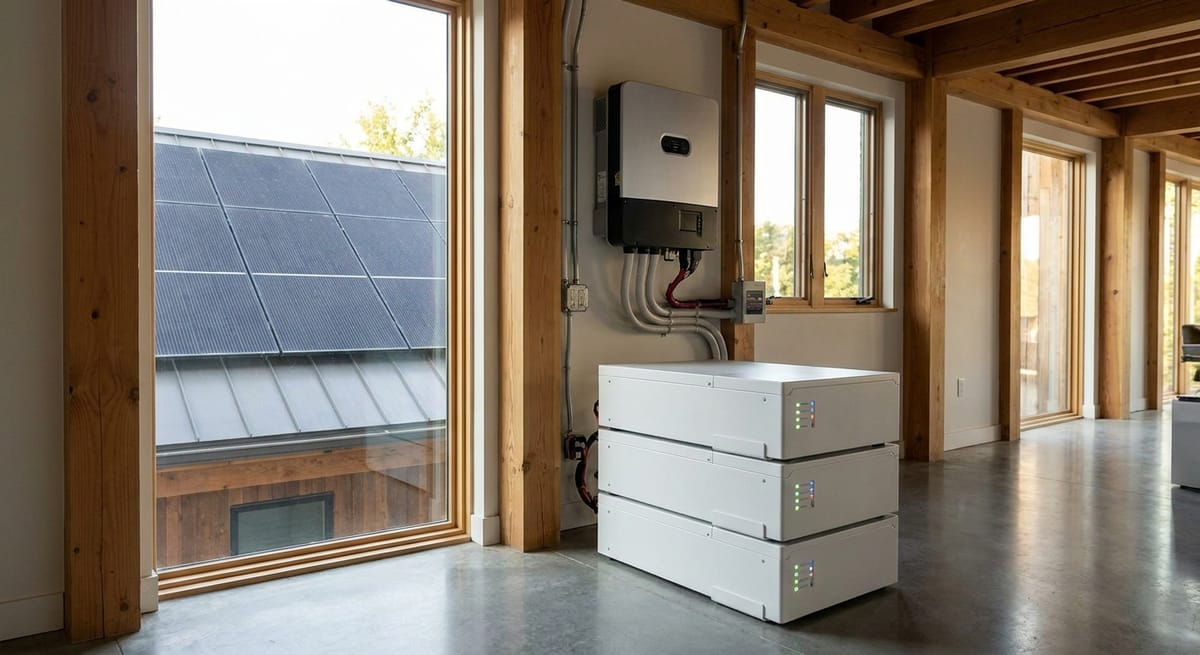
In short
- There are three practical off grid backup power builds — Essential, Medium Hybrid, and Heavy-Duty — each sized to a different household load, and each buildable from components on South African shelves.
- Correct sizing means calculating daily kWh consumption, peak sun hours, and motor surge requirements before you buy a single component — not after.
- LiFePO4 is the only battery chemistry worth specifying for daily load-shedding cycling; lead-acid fails in a fraction of the cycles and costs more over time.
What’s in this guide
- Why does off grid backup power need a proper plan?
- What are the three off grid backup power builds?
- What does each build cost in South Africa?
- How do you size the solar array and battery bank?
- How do you handle high-surge loads like pumps?
- What goes into each build?
- Where do you buy components in South Africa?
- What keeps a system alive for ten years?
- How do you shrink the system you need?
- Key takeaways
- Frequently asked questions
Why does off grid backup power need a proper plan?
Because an unplanned system fails on the first properly cloudy week, and an oversized one wastes tens of thousands of rand on capacity you will never use. Off grid backup power is a sizing exercise first and a shopping exercise second — the arithmetic comes before the credit card.
Off grid backup power stops being a luxury the moment the fridge starts warming up, the router goes dark, and every light in the house cuts out at once. South Africa’s version of this is not a rare emergency — it is scheduled load-shedding published by Eskom, which means the outage is predictable and the system that covers it can be planned with unusual precision.
Before you size anything, decide what actually needs to stay on and in what order — we have written a full guide on what to keep running, and in what order, and the priority sequence there (medical devices, then communications, then refrigeration, then lighting) is the foundation every build below stands on. This article is the companion piece: once you know your load, these are the three systems that carry it.
What are the three off grid backup power builds?
The three builds are Essential (a small pure-sine unit with about 2 kWh of lithium storage), Medium Hybrid (a 5 kW hybrid inverter with 5–7 kWh of storage and a modest array), and Heavy-Duty (8–10 kW of inverter capacity, 15–20 kWh of storage, and a serious array for full independence).
Every household’s energy needs are different, so the three builds cover the most common scenarios — from a townhouse keeping the Wi-Fi and one fridge alive through a two-hour slot, to a rural property cutting the utility cord entirely.
| Build | Inverter | Battery | Solar array | Best for |
|---|---|---|---|---|
| Build 1: Essential Load | 1.5–2.4 kW pure sine wave | ~2 kWh LiFePO4 | 400–600 W (optional) | Small homes, flats, home offices |
| Build 2: Medium Hybrid | 5 kW hybrid (MPPT built in) | 5–7 kWh LiFePO4 | 2–3 kW | Mid-sized homes with daily load-shedding |
| Build 3: Heavy-Duty | 8–10 kW (or dual 5 kW parallel) | 15–20 kWh LiFePO4 | 5–8 kW | Full off-grid, rural properties, pumps and workshops |
What does each build cost in South Africa?
Working from retailer listings we checked in August 2026: Build 1 hardware starts around R12,000–R16,000, Build 2 hardware adds up to roughly R40,000–R50,000, and Build 3 hardware to roughly R85,000–R120,000 — all before mounting, cabling, installation and certification, which you should get quoted locally.
These are the component listings behind those figures, each from a page we actually opened:
- Build 1 core unit: a Gizzu Hero Pro 2,048 Wh LiFePO4 UPS power station with a 2,400 W pure-sine output was listed at R12,400 including VAT (Tech Guy SA, August 2026 — showing supplier out of stock when we checked, which tells you how fast this category moves).
- Build 2 inverter: a Sunsynk 5 kW hybrid inverter at R17,100, in stock (JC Solar Panels, August 2026).
- Build 2 battery: a Hubble AM-2 5.5 kWh lithium battery at R15,899 (JC Solar Panels, August 2026) — the same battery was R20,954 at Sunstore in the same month, which is exactly why you compare before you buy.
- Panels: 555–565 W panels (Canadian Solar 555 W at R1,736; JA Solar 565 W at R1,659) on JC Solar Panels’ August 2026 listings, both showing out of stock at the time — panel stock churns constantly, so treat these as indicative and confirm availability.
- Build 3 inverter: 8 kW Sunsynk hybrids were listed between R19,549 (Lynks model, JC Solar Panels) and R31,049 (standard model, JC Solar Panels), with Solar Lane listing the single-phase 8 kW at R28,750 — all three listings showed out of stock in August 2026, so budget from these numbers but get current quotes.
Installation is the figure we will not invent. A compliant install includes mounting, DC and AC cabling, protection devices, a registered electrician’s labour and a Certificate of Compliance, and it varies with your roof, your distribution board and your town. Get three written quotes; any installer unwilling to itemise hardware against labour has told you something useful about them.
How do you size the solar array and battery bank?
Divide your daily kWh consumption by your site’s peak sun hours multiplied by a real-world efficiency factor of about 0.82, and that is your required array size. Size battery storage at 1.2–1.5 times daily consumption so overnight use and an overcast day do not flatten the bank.
- Required solar capacity (kWp): daily kWh consumption ÷ (peak sun hours × 0.82 efficiency factor)
- Panel count (550 W class panels): required capacity in watts ÷ 550 W
- Battery sizing: storage equal to 1.2–1.5× daily consumption handles overnight usage and consecutive overcast days without over-discharging cells
The 15–20% loss built into that efficiency factor is not pessimism — it is temperature derating, inverter losses and cable resistance, and it is real. Get the formula wrong in one direction and the system fails on day two of a cloudy stretch; get it wrong in the other and you have spent tens of thousands of rand on capacity that sits idle. For the array side of this calculation in proper depth, see how much solar you actually need.
How do you handle high-surge loads like pumps?
Anything with a motor draws several times its running wattage for a moment at start-up — typically three to five times. Your inverter’s surge rating must absorb the worst-case simultaneous spike, or heavy loads must be scheduled for peak daytime generation when the array can share the burden.
A borehole pump running at 900 W can briefly demand several kilowatts at the instant it switches on. This catches people out constantly, because they size for running watts and the spec sheet’s surge rating never gets read. It applies to borehole and pool pumps, compressors, power tools, washing machines and air conditioners — essentially anything with a motor inside it. Inverters carry separate ratings for continuous output and short-duration surge, and the difference between models is substantial; our guide to choosing an inverter covers how to read those ratings before you buy.
What goes into each build?
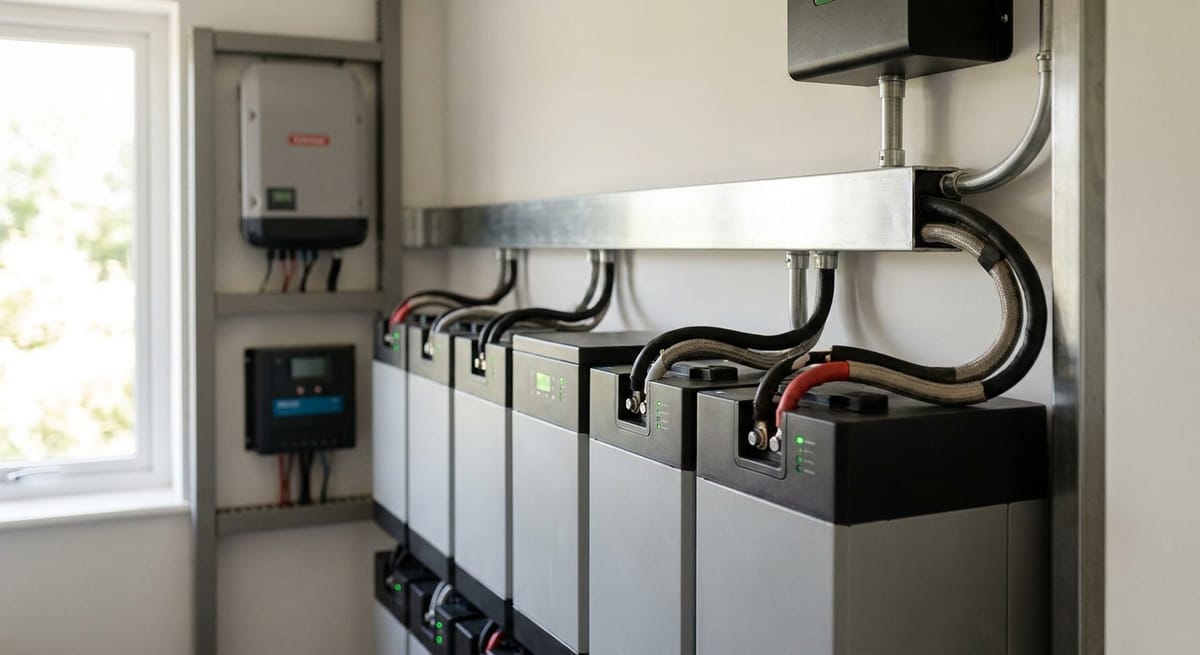
Each build pairs an inverter, a LiFePO4 battery bank and (from Build 2 upward) a solar array, with the details — wiring gauge, transfer switching, earthing and expansion headroom — mattering as much as the headline components. Here is what separates a reliable install from an expensive disappointment, build by build.
Build 1: The Essential Load Backup
Designed for small homes, flats, or a dedicated home office — this compact build keeps the essentials alive through the daily slots without major expense.
- Target loads: Wi-Fi router, LED lighting, laptops, phone chargers, a small energy-efficient fridge — in the priority order from our backup power guide above
- Key installation tip: connect only essential loads to a dedicated backup circuit — running high-draw lines through portable extension cords is a fire risk and a reliability disaster
- Battery note: keep LiFePO4 cells indoors and temperate; charging lithium below 0°C without built-in heaters causes permanent cell damage — rare on the Highveld, but a real consideration in cold rooms and garages on winter mornings
- Wiring: keep DC cable runs short and use a minimum of 6 mm² cable to limit losses
Build 2: The Medium Home Hybrid System
The right balance for a mid-sized home living with daily load-shedding — provided you also want the solar to trim the electricity bill. If your only goal is surviving two-hour slots, a battery-and-inverter system without panels does that for less; the hybrid earns its capital cost when the array works every day, not just during outages.
- Target loads: full-size fridge, home office, TV, microwave, water pressure pump, primary lighting
- Transfer time: look for an inverter whose UPS-mode switchover is specified under 10 milliseconds — slower transfers reboot desktop computers when the grid drops
- Neutral-earth bonding: confirm your installer fits the correct neutral-bonding arrangement for island (off-grid) mode; floating voltages during outages are genuinely dangerous, and this is precisely the kind of work that must be signed off with a Certificate of Compliance under SANS 10142-1
- Panel orientation: true north in South Africa, tilted to roughly your latitude for year-round production
Build 3: The Heavy-Duty Off Grid Powerhouse
Engineered for real energy independence — rural properties, boreholes, workshops, or anyone who never wants to think about the utility again.
- Target loads: air conditioning, deep borehole pumps, induction cooking, laundry appliances, workshop equipment
- Generator auto-start: wire an auxiliary generator into the inverter’s dry-contact terminals so it starts automatically when battery capacity drops low during extended overcast spells — and read your municipality’s noise by-law before buying the generator, not after
- Surge protection: fit DC isolators and Type 2 surge protection devices on every array string to protect the inverter’s electronics from lightning — this is Highveld storm country, and the inverter is the most expensive board in the system
- Modular expansion: choose a battery architecture that allows parallel expansion without a full re-wire; energy needs almost always grow
Where do you buy components in South Africa?
Buy from established South African retailers and distributors so you get valid manufacturer warranties, local stock and someone to phone when a fault develops — not a shipping container from overseas with no documentation. Compare at least three listings for every major component, because prices differ sharply between retailers.
The August 2026 listings in this guide came from JC Solar Panels, Sunstore, Solar Lane and Tech Guy SA, and the spread between them makes the case by itself: the identical Hubble battery varied by more than R5,000 between two retailers in the same month. Installers also buy at trade prices from wholesale distributors you cannot buy from directly, which is one reason a quoted installed price can beat your own hardware arithmetic — and one more reason to get itemised quotes rather than assuming the DIY route is automatically cheaper. Whatever the source, insist on components with local warranty support and confirm the battery and inverter are approved for use together, or the battery warranty may be void.
What keeps a system alive for ten years?
Three decisions: know your worst-case surge before you spec the inverter, specify LiFePO4 chemistry only, and get certified sign-off on the electrical work. Everything else — brand, app features, cabinet colour — matters far less than these.
- Calculate peak surge amperage first: inverters carry separate ratings for continuous output and short-duration surge. Know your worst-case simultaneous surge before you choose the inverter, not after.
- Specify LiFePO4 chemistry only: LiFePO4 cells are typically rated in the thousands of cycles at 80% depth of discharge — often exceeding ten years of daily cycling. Lead-acid cells under the same daily discharge typically fail within a few hundred cycles, which at load-shedding frequency means replacements within a year or two. For the full comparison, see our guide to battery storage.
- Get certified sign-off: any tie-in to the distribution board must be done by a registered electrician and covered by a Certificate of Compliance. Without it, your household insurance may not pay out — and the neutral-bonding and back-feed risks are safety issues, not paperwork.
How do you shrink the system you need?
Cut your baseline consumption before you finalise the build spec, because every watt you remove from the load is capacity you never have to buy. Lighting, cooking and water heating are the three big levers, and all three can come off the electrical load almost entirely.
- LED lighting: replace every remaining incandescent and halogen bulb — lighting then barely registers on the battery.
- Emergency illumination: keep headlamps and rechargeable lanterns to hand; a torch through a short slot beats running the house lights.
- Cook on gas: a gas hob — even a portable two-plate — takes the single spikiest cooking load off the inverter entirely.
- Heat water differently: the geyser is usually the largest single electrical draw in a South African home. A solar or gas geyser removes it from the equation entirely.
- Thermal ballast: keep the freezer well stocked and add filled water bottles; frozen solid, they hold the cold through an outage significantly longer.
Key takeaways
- Off grid backup power comes in three practical tiers — Essential (from roughly R12,000 in hardware), Medium Hybrid (roughly R40,000–R50,000 in hardware), and Heavy-Duty (roughly R85,000–R120,000 in hardware) — based on August 2026 South African retailer listings, before installation, which you should have quoted locally.
- Size the array with the formula daily kWh ÷ (peak sun hours × 0.82), and size battery storage at 1.2–1.5× daily consumption so overnight loads and overcast days do not flatten the bank.
- Motor loads — pumps, compressors, air conditioners — draw three to five times their running wattage at start-up; the inverter’s surge rating must cover the worst-case simultaneous spike.
- LiFePO4 is the only chemistry worth buying for daily cycling: thousands of cycles at 80% depth of discharge against a few hundred for lead-acid makes the upfront premium the cheaper option over any realistic system life.
- Prices vary sharply between retailers — the same 5.5 kWh battery differed by over R5,000 between two listings in one month — so compare at least three sources and confirm stock before committing.
- Certified sign-off is not optional: distribution-board work needs a registered electrician and a Certificate of Compliance, or your insurance may be void.
- Reduce the load before you size the system: gas cooking, alternative water heating and LED lighting shrink both the build and the bill.
Frequently asked questions
Can off grid backup power systems use lead-acid batteries instead of LiFePO4?
Technically yes, but rarely wisely. LiFePO4 cells are typically rated in the thousands of cycles at 80% depth of discharge — often ten years or more of daily service. Lead-acid degrades rapidly when discharged past 50% and typically fails within a few hundred cycles under daily load-shedding use, meaning replacements every year or two. The lower purchase price quickly becomes the more expensive off grid backup power decision.
How do I calculate the right inverter size and battery capacity for my home?
Add up the running wattages of everything you plan to run simultaneously, then add a healthy margin for motor surge. For battery capacity, multiply your continuous draw by the hours of autonomy you need — a 600 W sustained load over a five-hour outage needs 3 kWh of usable capacity. Factor in the 80% depth-of-discharge limit so your off grid backup power bank is not undersized on paper.
Do hybrid systems need sunshine to work, or can they charge from the grid?
Hybrid inverters charge from both sources. Solar is the primary mechanism for cutting the bill, but the inverter automatically tops the battery up from the grid — or a generator — whenever power is available. In practice this means your off grid backup power reserve is full before the next scheduled slot, regardless of whether the day was sunny or overcast.
What is the difference between a hybrid inverter and a standard inverter?
A standard inverter converts DC battery power to AC, and that is all. A hybrid inverter adds a built-in MPPT solar charge controller and automatic transfer switching, so it manages solar input, grid charging and battery dispatch simultaneously — switching between sources seamlessly during an outage. For off grid backup power beyond the smallest build, the hybrid architecture is worth the difference.
Is a generator still necessary if I have a large solar and battery system?
For most Medium Hybrid and many Heavy-Duty installations, a generator becomes an emergency fallback rather than a daily tool. For fully off-grid properties or long overcast spells, wiring a generator into the inverter’s auto-start terminals gives your off grid backup power system a reliable safety net — just check your municipality’s noise by-laws first, because most residential zones restrict generator running hours.
Ready to spec your build? Start with your measured load — not the brochure — and work through the sizing guides linked above before a single rand leaves your account.