Journal
Bee propolis in South Africa: how to harvest, store and sell it
In short
- Propolis is the resin bees collect from plants to seal the hive. It is the hive product most South African beekeepers scrape off and throw away, and one of the easiest to sell.
- A plastic trap mat, a freezer and a bowl of cold water give you clean propolis without scraping frames.
- Sell it as a raw hive product with no health claims. Anyone allergic to bee products should avoid it and speak to a doctor or pharmacist.

What’s in this guide
- What is propolis?
- Why does South African propolis vary from place to place?
- How do you harvest propolis without harming the hive?
- How should you store raw propolis?
- How do you sell propolis without breaking the rules?
- How has propolis been used in the past?
- What safety precautions should you take?
- Key takeaways
- Frequently asked questions
Propolis is one of the most overlooked resources on a beekeeping homestead, from the Karoo to the KwaZulu-Natal midlands. Most beekeepers know it only as the sticky dark paste that glues the boxes together and gums up the hive tool.
As our four hives, one season page notes, there is very little South African writing on harvesting it properly, and a propolis trap costs almost nothing. This guide covers what propolis is, why it differs from region to region, how to harvest and store it cleanly, and how to sell it honestly.
What is propolis?
Propolis is a resinous mixture that honeybees make from substances collected from plant buds and exudates. Bees use it to seal openings and cracks, smooth the inside walls of the hive and protect the colony against invaders and weather. The name comes from the Greek pro, “at the entrance to”, and polis, “community” or “city”.
Worker bees gather the resin, carry it home on their hind legs and work it into the hive. It is soft and sticky when warm and turns brittle when cold, which is the property the harvesting method below relies on.
Reviews often quote raw propolis as roughly 50% plant resins, 30% wax, 10% essential oils, 5% pollen and 5% other organic matter (Wagh, 2013). Treat those numbers loosely: a later review points out that this oft-repeated breakdown appears to have no experimental basis, and real samples vary widely.
Why does South African propolis vary from place to place?
Because bees make it from whatever plants are near the hive, propolis changes colour, smell and chemistry with the vegetation. Its colour ranges from yellow to dark brown depending on its plant source and age.
South African research bears this out. A study of 39 propolis samples from Gauteng, the Northern Cape and the Western Cape found that their volatile compounds varied between locations, with different marker compounds for each province.
The country also has two native honeybee subspecies working very different vegetation: the Cape honeybee (Apis mellifera capensis) in the winter-rainfall south-west, and the African honeybee (Apis mellifera scutellata) across the summer-rainfall interior. Expect a fynbos apiary’s propolis to look and smell different from a Bushveld one, and describe it to buyers by where it came from.
How do you harvest propolis without harming the hive?
The cleanest method uses a plastic trap rather than scraping frames, which pulls splinters, wax and dirt in with the resin.
Gear you’ll need
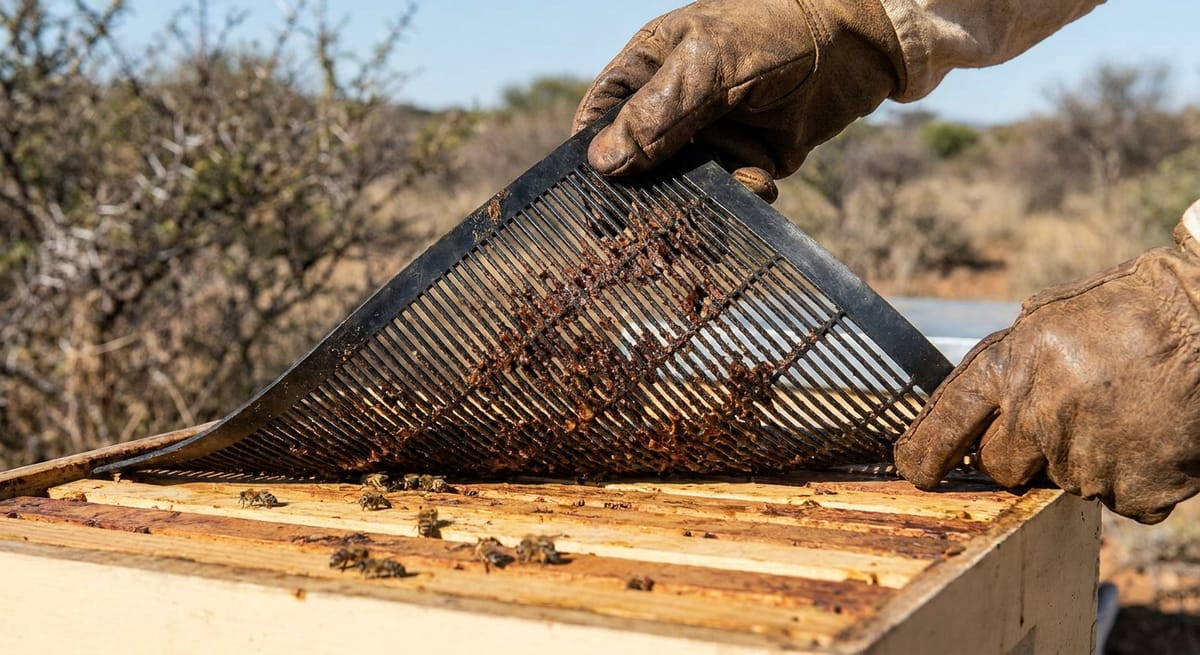
- A flexible plastic propolis trap mat, sized for a standard 10-frame Langstroth hive
- A flat stainless-steel hive tool
- A small wooden wedge or a dry twig
- Clean glass jars with lids
- Heavy-duty zip-top freezer bags
- A large bowl, very cold water and a fine mesh strainer
- Install the trap: during the active foraging season, lay the trap mat over the top bars in place of the inner cover. Its narrow slots are too small for bees to pass through but let in light and air.
- Prompt the bees to seal it: prop the outer lid up slightly with the wedge or twig so that light and air leak across the mat. The bees respond by filling the slots with propolis.
- Check and remove: look at the mat every few weeks. Once the slots are filled, lift it out and bag it flat so that it does not stick to everything in your vehicle or workshop.
- Freeze it: do not try to peel propolis off at room temperature, because it stretches into a mess. Freeze the bagged mat for a few hours until it is brittle, then flex and twist it so that the propolis cracks off in small pieces.
- Clean it in cold water: tip the pieces into very cold water and stir. Wax, bee parts and debris float, and the propolis sinks. Skim off what floats, strain the propolis, and dry it on baking paper until completely dry before storing it.
How should you store raw propolis?
Store dry propolis in airtight glass jars in a cool, dark cupboard, and label each jar with the apiary area and the harvest date. Keep it away from heat, which softens it, and from fabric, which it stains.
How do you sell propolis without breaking the rules?
Selling raw propolis as a hive product is straightforward. Describe what it is, where it came from and when it was harvested, and add a clear bee-product allergen warning.
What you must not do is make health claims. A product sold with claims about what it treats or prevents is regulated as a medicine, and SAHPRA’s complementary medicines framework requires oversight of those claims and specific labelling. Keep labels and market-stall talk to the product itself: raw propolis, from your own hives, harvested on a stated date.
Before you sell anything from your hives, make sure you are registered as a beekeeper. Our beeswax production guide sets out what South African law requires of beekeepers, and Make it Pay covers turning homestead produce into income.
How has propolis been used in the past?
People have used propolis for thousands of years. A review in Evidence-Based Complementary and Alternative Medicine records that Egyptians used it in embalming, that it has a long history in folk medicine, and that Stradivari used it in violin varnish.
Laboratory studies report antimicrobial activity, and a 2022 review describes a small number of clinical trials using standardised propolis extracts. That is not evidence that home-harvested propolis treats anything, and this site does not give preparations or doses. Our salves and infusions page explains why we write about growing and making, not about what a preparation does medicinally.
What safety precautions should you take?
- Allergy: if you are allergic to bee stings, honey or other bee products, avoid propolis and speak to a doctor or pharmacist. DermNet also advises people with known allergies to conifer, poplar, salicylates or balsam of Peru to avoid propolis because of shared allergens.
- Beekeepers can become sensitised: contact allergy to propolis is recorded in beekeepers, and DermNet notes that those affected may be able to keep working by wearing rubber or leather gloves. Wear gloves when you scrape boxes or handle traps.
- Staining: propolis stains fabric, stone and wood. Work over cardboard and keep your harvesting tools separate.
Key takeaways
- Propolis varies with the plants near the hive, so fynbos and Bushveld propolis look and smell different. Sell it by origin.
- A plastic trap mat gives a cleaner harvest than scraping frames.
- Freezing makes propolis brittle, and cold water separates it from wax and debris.
- Store it dry, airtight, cool and dark, labelled with area and harvest date.
- Sell it as a raw hive product with an allergen warning and no health claims.
- Anyone allergic to bee products should avoid it and speak to a doctor or pharmacist.
Frequently asked questions
Can I sell propolis at local markets?
Yes, as a raw hive product, provided you are registered as a beekeeper and make no medicinal or curative claims. Label it with what it is, its origin and harvest date, and a bee-product allergen warning. A product sold with health claims falls under SAHPRA’s complementary medicines rules.
How long does harvested propolis keep?
Dry propolis stored airtight in a cool, dark place keeps well. Label it with the harvest date and sell the oldest stock first.
Does a propolis trap harm the bees?
A trap gives the bees slots to seal, much like the gaps they would fill in a hollow tree or a hive box, and it does not touch the brood or the stores. Fit it during the foraging season and remove it when it is full.
For the rest of the apiary, start with four hives, one season and the beeswax production guide.