Journal
Spekboom: The Ultimate Off-Grid Homestead Plant
In short
- Spekboom (Portulacaria afra) switches between two photosynthetic pathways, so it grows fast when water is available and survives hard drought in semi-arid country that sees only a few hundred millimetres of rain a year.
- Intact spekboom thicket stores an unusual amount of carbon for a dryland ecosystem — SANBI compares a stand to an equal area of deciduous forest — but the viral “better than rainforest” figures overstate what a young planting actually achieves.
- On an off-grid property it earns its keep as a living firebreak, drought fodder bank, bee pasture, edible crop, and slope stabiliser — all from free cuttings.
What’s in this guide
- Why does spekboom outperform every other succulent?
- How much carbon can spekboom actually sequester?
- What are the best off-grid uses for spekboom?
- Can you eat spekboom, and what is it traditionally used for?
- How do you propagate and grow spekboom from cuttings?
- What can spekboom earn for an off-grid enterprise?
- Key takeaways
- Frequently asked questions
Spekboom (Portulacaria afra) is the biological paradox every off-grid homesteader has been searching for: a plant that is simultaneously drought-proof, fast-growing, edible, fire-resistant, and almost free to propagate at scale. Native to the semi-arid subtropical thicket of South Africa’s Eastern Cape, it is also sold internationally as Elephant Bush, Dwarf Jade, or Baby Jade — though it is not the same as the common Jade Plant (Crassula ovata). Spekboom is non-toxic, fully edible, and distinguished by its reddish-brown stems.
For most homesteaders the trade-off has always been brutal: plants that tolerate drought grow at a geological pace, while plants that romp away need constant water. Spekboom sidesteps that trade-off entirely, and the science behind it is genuinely extraordinary.
Whether you’re on ten hectares of degraded South African veld, a dry plot in rural Australia, or nursing a container plant through a British winter, this guide covers everything you need to know about growing and using spekboom to its full potential.
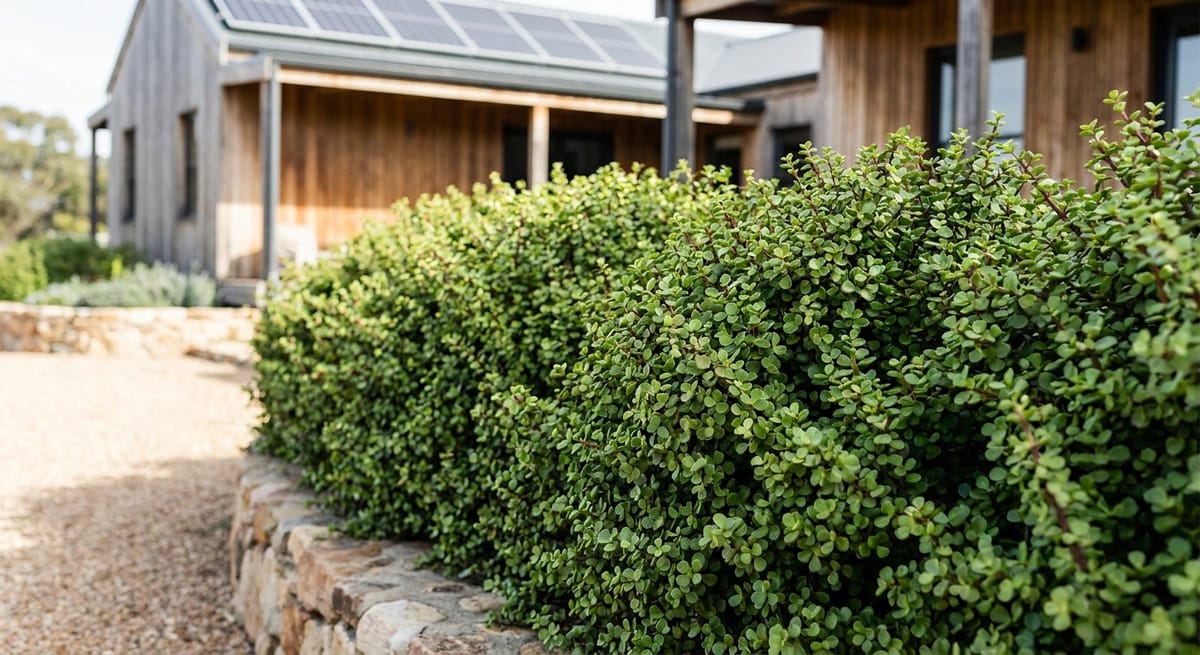
Why does spekboom outperform every other succulent?
Spekboom is a facultative CAM plant — meaning it can dynamically switch between two entirely different photosynthetic pathways depending on what the weather is doing. That single trait is what separates it from everything else in the succulent world: fast growth when conditions allow, near-total shutdown of water loss when they don’t.
Most plants are locked into one mode. C3 plants open their stomata during the day to grab CO₂, which makes them fast growers but thirsty ones. CAM plants (think classic succulents) keep their stomata sealed during the heat of the day and absorb CO₂ only at night, making them supremely drought-hardy but achingly slow. Spekboom does both:
- Abundant water / cool weather: operates as a C3 plant — daytime CO₂ absorption, rapid leaf expansion, dense biomass accumulation.
- Extreme drought / intense heat: flips to CAM metabolism — stomata sealed during the day, minimal daytime water loss, CO₂ absorbed quietly under cover of night.
The practical upshot is that spekboom holds its own in proper semi-arid country — the thicket it dominates gets by on a few hundred millimetres of rain a year — and then sprints the moment conditions improve. No other common succulent offers that combination.
How much carbon can spekboom actually sequester?
Less than the internet says — and still remarkable for a dryland plant. SANBI notes that a stand of spekboom in arid country can remove as much carbon from the atmosphere as an equal area of deciduous forest. But the “better than the Amazon” headlines don’t survive contact with the field data, and an honest homesteader should know both halves of the story.
The optimistic half is real. According to SANBI’s PlantZAfrica entry for Portulacaria afra, spekboom’s dual photosynthetic machinery lets it keep fixing carbon through conditions that shut other dryland vegetation down, which is why mature, intact thicket carries so much more carbon than anyone expects of semi-arid scrub. It also drops a continuous carpet of fleshy leaves that decompose into organic matter, moving some of that carbon into the soil rather than cycling it straight back into the atmosphere.
The sobering half comes from the restoration research itself. A 2021 region-wide survey of 173 spekboom restoration plots across the Eastern Cape (published in PeerJ) found that planted truncheons survived at an average rate of just 28%, that measured carbon gains in young plantings were a small fraction of the figures quoted in the press, and that heavy browsing — goats, game, anything with an appetite — was the single biggest predictor of failure. The famous headline numbers come from the best sites under the best conditions, measured on established stands decades old. They are a ceiling, not a promise.
The lesson for a homesteader is simple: plant spekboom for what it does for your land this decade — shade, fodder, fire protection, soil recovery — and treat long-term carbon storage as a bonus that arrives only if you keep browsers off the young plants and give the thicket years to knit together.
Beyond carbon, spekboom acts as a primary-succession nurse plant on degraded land. Its dense canopy keeps the surface markedly cooler on a hot summer afternoon, fallen leaves form a moisture-retaining organic sponge that catches wind-blown seeds, and the sheltered microclimate underneath allows grasses, herbs, and native shrubs to re-establish on bare, baked earth that nothing else would touch. It pairs naturally with other soil-building moves like making biochar from invasive wattle — one feeds the soil from above, the other from below.
What are the best off-grid uses for spekboom?
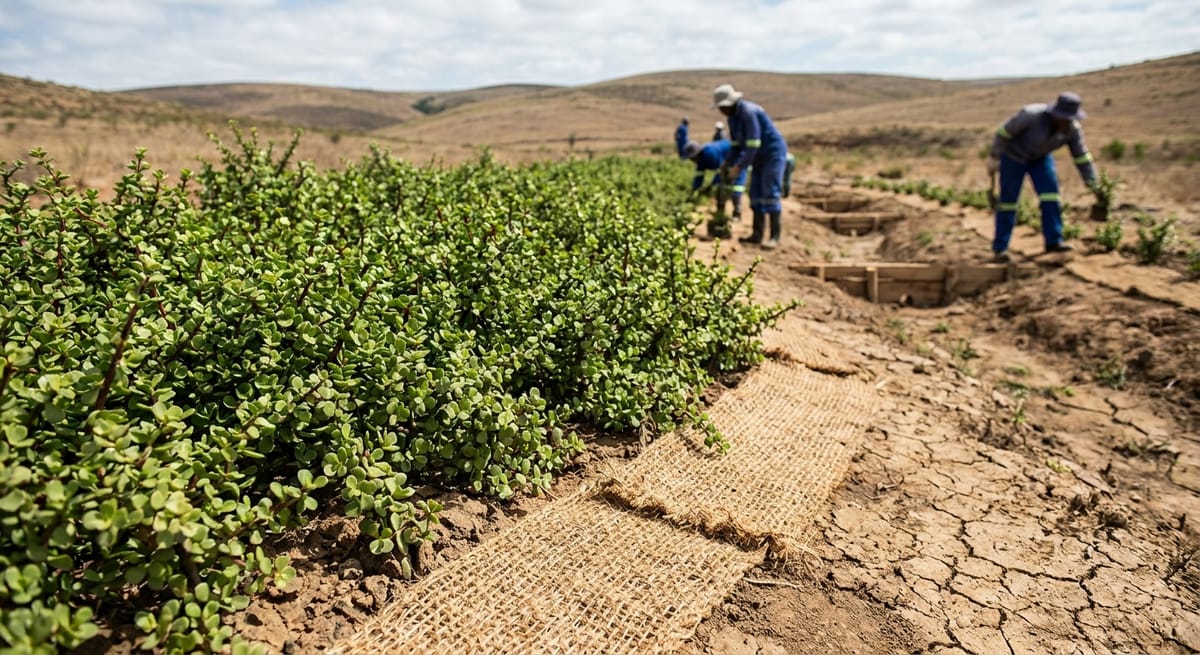
Four jobs at once: a living firebreak around your home zone, a drought fodder bank for livestock, late-season bee pasture, and a root system that stitches eroding slopes back together. Every one of them starts from a free cutting — which is why spekboom earns its square metre faster than almost anything else you can plant.
1. Living firebreak
In rural and off-grid settings, a dry hedge of pine or acacia is essentially a pre-loaded firelighter. Spekboom is the opposite: its leaves and stems are mostly water. When exposed to direct flame, the branches scorch slowly while releasing internal moisture, acting as a thermal shield rather than a fuel source. Plant a dense belt a few metres wide around your battery shed, water tanks, and home zone and you have a low-maintenance, self-sustaining firebreak that improves every year.
2. Emergency fodder and livestock feed
Spekboom has fed elephants, kudu, and tortoises for millennia, and domestic stock take to it just as readily — SANBI describes it as heavily browsed by game and domestic animals alike. The leaves are succulent and highly palatable, and their high moisture content is the real prize: during severe water shortages, feeding livestock fresh prunings meaningfully reduces their daily drinking-water requirement. Goats, sheep, cattle, ostriches, and chickens all take it. One word of caution: treat it as part of a balanced diet alongside dry roughage rather than the sole ration, to keep ruminant digestion running smoothly.
3. Bee pasture
From late spring into summer, mature plants produce dense clouds of small, star-shaped, pink-to-purple flowers at exactly the time when other forage is scarce due to peak heat. The resulting honey is light in colour, delicate in flavour, and prized by local beekeepers — a genuine premium product from essentially zero input. If bees are part of your plan, our account of what four hives produced in a single season shows what that forage is worth.
4. Slope stabilisation
Spekboom’s sprawling root architecture makes it an ideal soil binder for terraced gardens, permaculture swales, and active erosion gullies. Plant truncheons along the downhill berm of a swale and the roots anchor loose earth while the canopy shields the trench from evaporation. Placed across active gullies (donga repair in South African farming parlance), the stems slow fast-moving rainwater, trap sediment, and gradually level out eroded channels. Left unpruned, outer branches will arch down, touch soil, sprout roots, and form a self-expanding green carpet that locks the ground permanently.
Can you eat spekboom, and what is it traditionally used for?
Yes, you can eat it — the leaves are crisp, juicy, and pleasantly sour, good in salads, stews, and pickles. Spekboom also carries a long record of traditional use in Southern Africa. What you won’t find here are health claims: South Africa’s Medicines Act (Act 101 of 1965) draws a hard line on those, and we stay behind it.
First, the kitchen. The flavour is refreshingly tart with a lemon-citrus undertone, and there’s a quirk worth knowing: because of the CAM cycle, leaves picked early in the morning hold more stored malic acid and taste noticeably sharper, while leaves picked in the late afternoon are milder and slightly sweeter. Time your harvest to the dish:
- Fresh salads: toss with cucumber, feta, olive oil, and cracked black pepper — the leaves replace the need for lemon dressing entirely.
- Cold drinks: blend fresh leaves with water, honey, and ginger for a sharp, cooling drink on a hot working day.
- Stews and curries: adds sourness and body as a natural thickener.
- Pickled leaves: submerge in a spiced vinegar brine for a shelf-stable, crunchy relish that stores beautifully in an off-grid pantry.
Then, the heritage. SANBI’s PlantZAfrica entry records a long list of traditional uses in Southern Africa: leaves chewed for sore throats and mouth infections, crushed leaves applied to skin ailments, insect stings, and sunburn, leaves eaten in the field to counter thirst and dehydration, and a traditional practice of giving the leaves to nursing mothers. Those are records of how the plant has traditionally been used — not evidence of effect, and not a recommendation. Nothing about spekboom treats, cures, or prevents anything, and anyone with a medical concern needs a professional, not a hedge.
As a houseplant, its CAM metabolism means it absorbs CO₂ at night rather than by day — a quirk of its chemistry that makes it an undemanding, forgiving companion in tight off-grid living quarters. If you’re building out a productive plot rather than a windowsill, spekboom slots in alongside a proper vegetable garden as the low-effort perimeter to the high-effort beds.
How do you propagate and grow spekboom from cuttings?
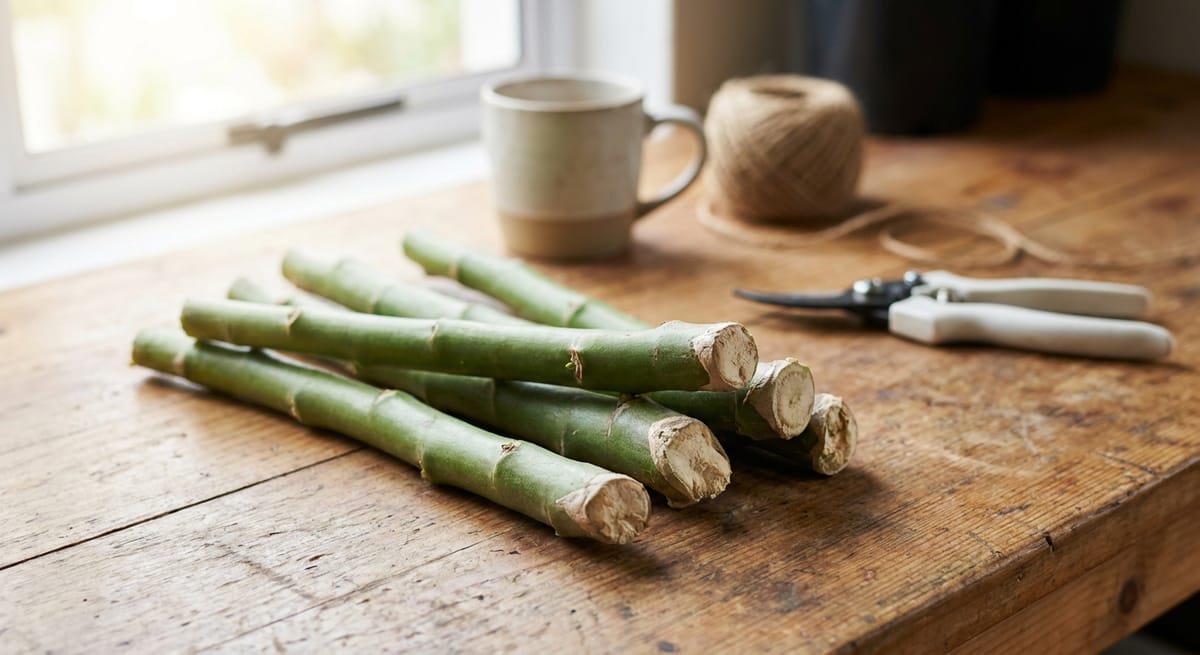
Cut hardwood truncheons, let them callus in the shade for a few days, plant into well-drained soil, and water sparingly — that’s the whole protocol. No rooting hormone, no misting bench, no greenhouse. SANBI notes that cuttings strike root easily, and a healthy truncheon typically shows new growth within four to six weeks.
- Take hardwood truncheons. Select healthy branches 20–50 cm long with a stem diameter of 1–3 cm. Cut cleanly below a leaf node with sharp, clean secateurs.
- Callus for 2–4 days. This is the step most beginners skip and then wonder why their cuttings rot. Lay the truncheons in a dry, shady, well-ventilated spot and let the cut end seal over completely before soil contact.
- Plant into well-drained soil. Insert the callused end to a depth of 10–15 cm with at least two leaf nodes buried. Firm the soil around the stem to hold it upright.
- Water sparingly. A light water immediately after planting to settle the soil, then roughly every 7–10 days for the first month. The cutting draws on internal moisture reserves to drive root development. New green leaf buds signal a successful strike.
Spacing depends on intended use:
- Dense living hedge: 30–50 cm apart in a single or double row; trim sides annually to force dense, interwoven branching.
- Perimeter firebreak: roughly a 1 m grid; leave to grow wild and accumulate deep ground cover.
- Fodder bank: 1.5–2 m rows; prune lower branches to feed livestock, maintain a central trunk.
- Slope erosion control: 30 cm contour lines; leave entirely unpruned so stems arch down and root naturally.
And plan for teeth. The single clearest finding from the Eastern Cape restoration trials is that browsing kills young plantings — if goats, cattle, or game can reach your truncheons in their first seasons, fence them off or plant somewhere they can’t reach.
In colder climates — the UK, or anywhere with real winter frost — manage spekboom as a container plant in a 50/50 soil-to-perlite mix in terracotta pots, moving outdoors in summer and into a sunroom or greenhouse over winter. SANBI rates mature plants as tolerating a moderate degree of frost, but treat that as light frost only: a hard freeze in open ground will finish it off. It also makes an exceptional bonsai subject — it scales down into ancient-looking miniature trees beautifully.
What can spekboom earn for an off-grid enterprise?
Nursery stock, value-added pantry products, and speciality honey are the realistic earners — low-capital, quick to start, and proven at farmers’-market scale. Carbon credits get the headlines but are the hardest route for a smallholder: the income depends on verified survival over decades, and the field data shows how easily browsing undoes a planting.
- Commercial nursery and cutting sales: urban landscapers, permaculturists, and water-wise gardeners are hungry for spekboom stock. Producing rooted plants in recycled containers or selling bulk unrooted truncheons requires minimal capital and almost no overhead.
- Value-added farm products: pickled spekboom, cordials, and handmade soaps sell well at farmers’ markets and eco-retail shops — keep the labels about flavour and craft, not health, and you stay on the right side of the law.
- Apiary and honey sales: spekboom floral honey is a speciality product with genuine market demand — light, delicate, and distinctive enough to carry its own label.
- Carbon and restoration partnerships: landowners with degraded veld can partner with established restoration programmes, and large-scale projects are active across the Eastern Cape. Go in with open eyes: the region-wide trials measured average truncheon survival of just 28%, browsing was the biggest cause of failure, and credit revenue only follows verified, long-term survival. Fence first; count income later.
Key takeaways
- Spekboom’s facultative CAM switching lets it grow rapidly when water is available and survive hard drought in semi-arid country — no other common succulent does both.
- Mature, intact spekboom thicket stores an unusual amount of carbon for a dryland ecosystem — SANBI compares a stand to an equal area of deciduous forest — but region-wide restoration trials measured only 28% average survival of planted truncheons, with browsing the biggest cause of failure. Protect young plants and think in decades.
- On an off-grid property it works as a living firebreak, drought fodder bank, bee pasture, slope stabiliser, and edible crop — all from free cuttings.
- The leaves are genuinely good eating — tart in the morning, milder by afternoon — and the plant carries a long record of traditional use in Southern Africa, which we report as heritage, never as health claims.
- Propagation needs no specialist equipment: callus truncheons for 2–4 days, plant into well-drained soil, water sparingly, and expect rooting within four to six weeks — then keep browsers away from the young plants.
- Realistic income streams are nursery stock, pickles and preserves, and speciality honey; carbon-credit income is possible but slow, verification-heavy, and hostage to browsing pressure.
Frequently asked questions
What exactly is spekboom and why is it special for off-grid living?
Spekboom (Portulacaria afra) is a semi-evergreen succulent shrub native to South Africa’s Eastern Cape thicket. It matters for off-grid living because it combines survival in semi-arid conditions with fast growth when water is available, plus edibility, fire resistance, and real fodder value — all from a plant that propagates free from cuttings and improves degraded soil as it grows.
Is spekboom the same as the Jade Plant sold in garden centres?
No. Spekboom is Portulacaria afra, often labelled Elephant Bush, Dwarf Jade, or Baby Jade in the UK and US. The common Jade Plant is Crassula ovata — a different genus entirely. The key practical difference: spekboom is non-toxic and fully edible, while Crassula ovata is mildly toxic to pets and humans. Spekboom is also distinguished by its reddish-brown stems and faster growth.
Does spekboom really sequester more carbon than rainforest?
No — that claim outruns the evidence. SANBI’s assessment is that a stand of spekboom in arid country can remove as much carbon as an equal area of deciduous forest, which is remarkable for semi-arid vegetation. But measured rates in young restoration plantings are far lower than the headlines, and browsing can erase the gains. Mature, protected thicket over decades is where the carbon story is real.
Can I grow spekboom in the UK or in cold climates?
Yes, with management. SANBI rates mature spekboom as tolerating a moderate degree of frost, but a hard freeze in open ground will kill it. In the UK and similar climates, grow it in terracotta containers using a 50/50 soil-to-perlite mix, move it outdoors in summer, and overwinter it in a sunroom, conservatory, or greenhouse. It is also one of the finest bonsai subjects available, ideal for growers with limited space.
How long does it take for a spekboom cutting to root?
Under normal warm conditions, a properly callused truncheon — left to dry for 2–4 days before planting — typically roots within four to six weeks, a timeline SANBI’s growers confirm. The critical beginner’s mistake is planting fresh, wet cuttings straight into moist soil, which invites stem rot before roots can form. Callus first, water sparingly, and the spekboom does the rest on its own internal reserves.
Looking to build more resilience into your off-grid food system? Explore the rest of the Grow pillar for guides on soil health, propagation, and drought-proof food production — everything you need to make your property work harder without consuming more resources.